Nasser's Spirit Hovering Over Berlin!
Translated by: Rozana Sameh
Reviewed by: Nada Tamer
Written by Yasser Abu Mualliq
"In politics, there are no rivalries or alliances, only interests."
Germany is now following the approach of nationalization to emerge from its energy crisis. Moreover, it has recently adopted a more self-serving and individualistic approach, whether through its relative coolness and procrastination in providing arms to Kyiv or through its approach toward China, which was visited by German Chancellor Scholz, the first Western official to do so after 2019.
However, that was not all, as Berlin took more drastic measures that defy what is conventional in modern Western economies: instead of privatization, the government followed the approach of nationalization:
The beginning was with the company "Uniper" – the largest importer of gas in Germany, which the German government nationalized to save it from bankruptcy last September with an initial amount of 8 billion euros, thereby securing a 99% stake in the company. Later, this amount was increased to 29 billion euros.
Then, Berlin acquired the "Schwedt" refinery for oil and gas processing, which belongs to the Russian company "Rosneft" and is responsible for supplying 90% of Berlin’s fuel needs.
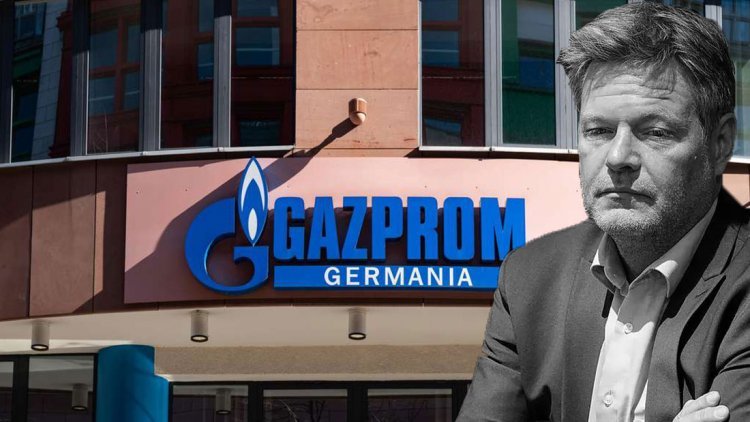
Yesterday, the German government announced the nationalization of another company in the energy sector, the company "SEFE," which was previously known as "Gazprom Germania," another Russian gas importer burdened with heavy debts. At the beginning of this year, SEFE obtained a loan of 11.8 billion euros from the German Investment and Development Bank (KfW), raising the total amount received from the bank to approximately 14 billion euros. Yet, that did not prevent the worst.
The total amount required to acquire SEFE will come from the package recently approved by the German parliament to mitigate the effects of rising energy prices and the disruption of Russian gas supplies, which totals 200 billion euros.
It remains to be said that Berlin justifies these nationalization decisions by arguing that the targeted companies are of structural importance to the energy sector in Germany.
The tragic irony lies in the name of the recently nationalized company, "SEFE," which is an abbreviation of the phrase "Securing Energy For Europe." The company is supposed to secure energy for Europe, but it cannot protect itself from bankruptcy!
Bottom line:
In times of crisis, governments that have ranted for years about democracy and free markets have repeatedly urged developing and emerging countries to privatize their infrastructure, will not hesitate to throw these principles out of the nearest window in order to rescue their own infrastructure and economy, whether through laws that violate citizens’ freedoms and contradict some articles of the constitution (as was the case with measures imposed to limit the spread of the coronavirus pandemic), or through governmental decisions of nationalization and acquisition that may be unprecedented since the rise of the Federal Republic of Germany from the ashes of World War II in 1949.
English Language Coordinator: Mariam Essa