A Gang of Children Running a Multi-Billion-Dollar Company
Translated by: Ganna Elebiary
Reviewed by: Mohaned Mohammed
Written by Yasser Abu Mualliq
This is how the chronological order of the collapse of the biggest cryptocurrency trading companies, namely FTX, was described. Although, in my opinion, the inevitable collapse of this company reveals the intertwining of politics and money, and shows how highly sophisticated fraud is an inherent part of Western capitalist economies in general. We are reminded, for example, of the bankruptcy of Germany’s largest financial services company, Wirecard, whose CEO fled to Russia. Just two years before that, the former German chancellor Angela Merkel had awarded him a prize for excellence and innovation. The FTX case has recently been discussed in detail by a number of Arab economic content creators. However, here I will highlight a few key points to make it easier for you to see the corruption, favoritism, and the overlap between money and politics in the West in general, and in the United States in particular:
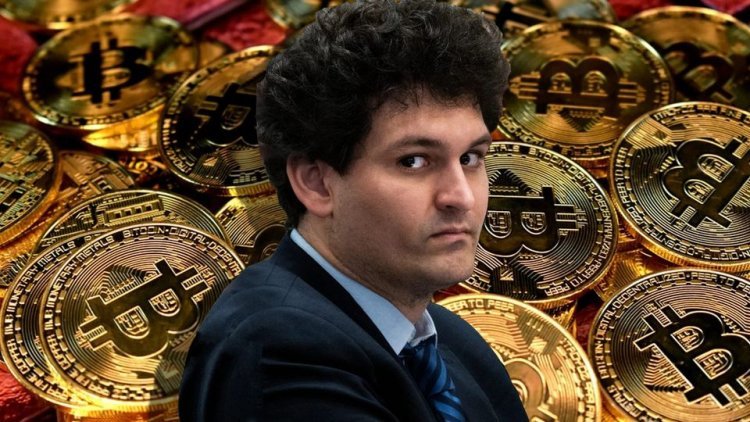
- Sam Bankman-Fried’s early career, the founder of FTX, began with Alameda Research, a company he set up after making millions of dollars by exploiting a loophole he discovered while trading Bitcoin at a New York–based firm. He realized he could buy Bitcoin cheaply in the U.S. market and sell it at a higher price in the Japanese market, earning around one million dollars in profit per day.
- Alameda Research was founded in 2017 by a group of Sam’s friends and colleagues, who later moved in together into a luxury residential complex in the Bahamas worth about $30 million. The company claimed it could deliver annual investment returns of at least 15%, an exceptionally high figure by the standards of major investment firms.
- This group, consisting of ten people, was involved in polyamorous relationships with one another and isolated themselves from the rest of the company’s employees. To the extent that Sam appointed his former girlfriend, Caroline Ellison, as the company’s CEO, despite her limited experience in trading and financial markets.
- In 2019, Sam convinced several major investment firms, including BlackRock, Sequoia Capital, SoftBank, and others, to invest around $2 billion to establish FTX. Some of the investment decisions made by these firms, often described as the smartest minds on Wall Street, are quite astonishing. For example, Sequoia Capital decided to invest $210 million in FTX after some participants in the meeting with Sam Bankman-Fried admitted being impressed by his personality, because he was playing a video game during the meeting!
- The idea behind FTX was to provide a cryptocurrency exchange: Sam offered depositors the option to store their cryptocurrencies on the company’s servers instead of using “cold wallets” (portable storage devices like USB drives). Storing coins on FTX’s servers made it easier to trade them, buying or selling, in exchange for a commission collected by the company
- The company also offered discounts for anyone who decided to buy its own coin, called “FTT.” This coin functioned as a “store of value” for the traded cryptocurrencies (this type of coin is known as a crypto token).
- The cunning genius behind FTT was that Sam supervised its software, which means, like the U.S. Federal Reserve, he could create as much as he wanted and convince both investors and clients of its market value. The vast majority of FTX’s spending, including sponsorships for sports and movie stars, and the purchase of an entire basketball arena in Miami, renamed “FTX Arena” was mostly paid in FTT tokens.
- Billions began flowing to Sam through Alameda and FTX, bringing him into the political arena. He started funding U.S. presidential candidates, such as Joe Biden, and supporting the election of Congress members from both sides of the political spectrum in the U.S. The goal was to exert political pressure to regulate the cryptocurrency market, which would directly benefit his company while harming his competitors, particularly his archrival Changpeng Zhao, aka CZ, the owner of Binance, whose role would later be pivotal in dismantling Sam’s financial empire.
- The beginning of the end came in the second half of the year. Financial inflation and rising interest rates caused investors to flee high-risk assets, primarily cryptocurrencies. The result was a series of collapses and bankruptcies among trading companies. Sam intervened through Alameda Research to financially rescue these companies by buying their cryptocurrency holdings at prices far below normal. In addition, Alameda suffered massive losses due to failed investments and trades, which was not surprising given an unqualified CEO like Caroline Ellison.
- The combination of financial bailouts and accumulated losses depleted Alameda’s liquidity, leading to the first financial crime. Sam transferred increasing amounts of FTX depositors’ funds to Alameda without their knowledge or consent. These transfers eventually reached $10 billion, mostly in FTT tokens, a clear violation of U.S. financial regulations.
- S. regulators ignored what FTX and Alameda were doing, even though they knew about it. Why? Speculation points to the connection between Glen Ellison, Caroline’s father and an economics professor at MIT, and Gary Gensler, the current chairman of the U.S. Securities and Exchange Commission (SEC), who had also been a professor at the same institute and had Glen as his direct supervisor.
- The collapse of Sam’s financial empire began with a leaked financial report revealing that the majority of Alameda’s assets consisted of FTT tokens (around $14.6 billion). This exposed two major sins for any investment fund:
- Lack of diversification, concentrating all investments in a single asset, which makes the fund highly vulnerable if that asset loses value.
- Holding large amounts of a coin issued by the exchange owned by the fund’s owner, which is comparable to the U.S. government owning most of its own Treasury bonds.
- With the drop in FTT’s price due to the overall decline in cryptocurrency markets, Alameda faced major difficulties maintaining enough liquidity to trade in the market. But what accelerated the collapse was Binance founder Changpeng Zhao’s retaliation against his rival Sam on Twitter.
- Changpeng Zhao (CZ) had been one of the earliest investors in FTX, buying 20% of its shares for $100 million. Years later, Sam repurchased those shares from him for $2 billion, paying entirely in… yes, his own FTT tokens. This meant that Sam’s competitor became one of the largest holders of the virtual coin whose value is entirely determined by Sam.
- After the aforementioned financial report leak, CZ announced that he would sell the remaining FTT tokens he held, worth around $2.1 billion. This announcement caused panic among FTX depositors, who began withdrawing their funds from FTT. This wave of selling caused the coin’s price to collapse by 80% within just 48 hours of CZ’s tweet.
- FTX did not have enough liquidity to handle all these sales, as its liabilities totaled around $9 billion, while it had only about $900 million in cash, covering just 10% of its obligations.
- Only 24 hours after Sam Bankman-Fried announced that everything was fine and his company’s assets were secure, it emerged that he had contacted his rival CZ, pleading with him to save FTX through a full acquisition. CZ refused after reviewing the company’s data and discovering the dark truth that Sam and his “team” had hidden for years.
- Currently, Sam Bankman-Fried and Caroline Ellison are considered fugitives, following the U.S. Department of Justice’s announcement of an investigation into $10 billion that Sam secretly transferred from FTX depositors’ funds to Alameda in the form of trading loans, and Caroline’s acknowledgment of this in an internal email, which constitutes an admission of a financial crime.
- Sam revealed that his 130 companies officially filed for bankruptcy on the same day and that he resigned from FTX, triggering a storm of losses in the cryptocurrency world, totaling around $152 billion.
- Questions remain about $1–2 billion of FTX’s funds that disappeared from company accounts without any employee’s knowledge. Most evidence points to Sam, who designed the company’s software and was the only person with the technical ability to execute such transfers.
- So, what is the lesson from the collapse of a company once valued at around $32 billion at the start of this year, then its current value is now negative $200 million?
The world today faces new limits every day, with challenges and problems unprecedented in human history. The capitalist system relies on continuous growth, and new ways to make profits appear every day. Often, these methods turn out to be illegal or fail due to haste and lack of proper research and scrutiny.
Youth is reckless. I said it once, twice, and a hundred times: young people are reckless and are more prone to making decisions with high risks. Sometimes, such decisions may lead to important breakthroughs for humanity, but more often, they are carefully executed scams designed to gain quick profits before disappearing from sight.
Finally, the traditional world of finance and business remains the most stable, simply because it is the most organized. Similarly, traditional media remains powerful and influential due to decades of established research practices, while digital and social media, despite their successes, still need stronger oversight and fact-checking mechanisms, or else we may see a new FTX emerge every couple of months!
English Language Coordinator: Mariam Essa