The Great Intellectual Helmi Sharawy Writes: The Future of the Horn of Africa and the Red Sea
Translated by Nouran Mohamed
Reviewed by Mohaned Mohammed
Written by Helmi Sharawy
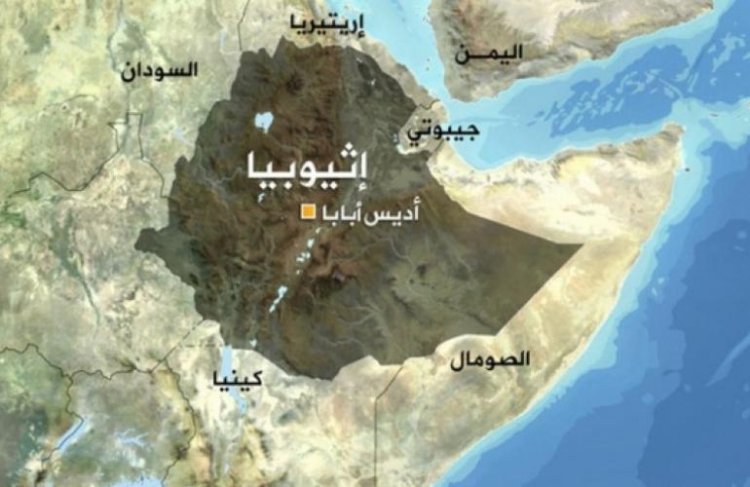
No one really paid much attention recently to repeated statements of Prime Minister “Abiy Ahmed” by the Ethiopian press regarding the potential of the Horn of Africa and the Red Sea to map out the region of the Horn of Africa and East Africa in order to build a strong state. This state includes Ethiopia, Eritrea, Sudan, Somalia, Djibouti, and South Sudan (September 2018).
Another press statement came immediately after the announcement of the first one, quoting “Ethiopia’s aim to unify East African countries and the Ethiopian President’s pursuit of creating this state” (Ethiopia News Agency). If we pay attention to this, will we rush to return to the “no problems” policy that the Ethiopian President promotes with neighboring countries to achieve security, peace and stability? Or would Ethiopia gain more by cooperating with major powers in leading the Horn and the Red Sea under the pretext of confronting acts of terrorism and piracy, while in reality, it reinforces American interests in countering the rising powers of China and Russia?
It is difficult to judge which of the two analyses is stronger at this point, especially since Ethiopia is leading an accelerating wave of reconciliation efforts in the region. Only the United Arab Emirates is competing with it through its extensive relations and activities with a number of these countries, some of which seem like focal points of Ethiopian influence.
It is worth mentioning the recent statements made during the interview between Mohammed bin Zayed and Abiy Ahmed last July. As it becomes clear that the United Arab Emirates has played a decisive role in the reconciliation between Ethiopia and Eritrea, which is the most significant political blow to the delicate balance of the dialogue.
The sequence continued Ethiopia’s intervention, possibly in coordination with the UAE, to advance the reconciliation between Eritrea and Somalia, followed by the reconciliation between Eritrea and Djibouti by Ethiopian efforts as well. The question remains open about the cooperation between Turkey and Qatar from other perspectives within a strategic framework, where Turkey has reached the point of “leasing a base in Sudan” and expanding projects into Somalia. Just like everyone who is building military bases in Djibouti and then in Somalia, all done with military flexibility among the parties.
Major powers across different directions are stumbling over the expansion of the “arms trade or aid associated with it,” while accommodating each other as well (Russia, China, and Iran on one side and the Western powers on the other).
In the numerous analyses attempting to draw conclusions, none can be deemed definitively stronger at this point. I present them here for researchers, as they deserve close observation, especially considering what has unfolded in just a few months that calls for caution.
Some start from “zero precise information” regarding the speed of Abiy’s moves to shape his persona following previous charisma, while simultaneously reclaiming the rights and positions of his own ethnic group, the Oromo, who now challenge their presence. This has led Abiy to perceive internal parties that are long prominent in the scene as anxious, making them reject his “no problems” policy both domestically and abroad, to the point that his office was personally stormed by military forces.
Others argue that the matter has not escaped European attention since the European Union foreign ministers met in June 2018, the month of the previously mentioned maneuvers, “to discuss elements of the EU’s global strategy in the Horn of Africa and the Red Sea,” with particular focus on Jordan and Cyprus. The space here does not permit enumerating the “summit group” meetings in Addis Ababa, Asmara, and Khartoum, which also require detailed examination.
A third view suggests a polite coordination with “donors,” each according to their strength, noting the current perception of weakened American, French, and even British influence, in contrast to the sweeping advances of China, Russia, and the UAE. This, it is argued, benefits development plans in the region, and competition with “these foreign powers” does not appear harmful, as evidenced by the roughly ten military bases in Djibouti alone.
Questions now focus on the capabilities of sub-regional powers to support the phenomenon of autonomous regional organizations (the newest and most peripheral) to protect their independence against the great powers. “Clever states” are actively pursuing this (Ethiopia and the UAE as models) to block the ambitions of others, such as Kenya and Uganda, or smaller organizations like IGAD in East Africa, or to capitalize on Saudi Arabia’s inability to realize its previous ambitions due to recent setbacks… alongside Egypt’s current incapacity to enter the competition for power. One cannot ignore the movements of Turkey or Iran, which affect the potential configuration of the Horn and the Red Sea.
In any case, Israel is concerned with developments in this region and remains uneasy about the orientation of this new grouping toward the Arab North Africa instead of balancing the eastern part of the continent under Israeli influence. The Horn and the Red Sea will continue to be subjects of questions and evolving analyses, adding phenomena resulting from emerging powers that could aid in building autonomy rather than assisting interveners.
Unless major powers consolidate their positions for oil, gold, maritime routes, and even Israel through aligning smaller ambitions in their favor even via smaller states like Djibouti, Jordan, and Cyprus, we can remain hopeful that the current shifts in the Horn and Red Sea countries may contribute to emerging political projects. As well as reinforcing the position of the Southern blocs in Asia and Africa.
English Language Coordinator: Mariam Essa