Dr. Ali El-Hefnawy Writes: British Interventions in Egypt
Translated by: Yasmine Mohamed
Reviewed by: Nada Tamer
Written by Dr. Ali El-Hefnawy
Since the arrival of Napoleon Bonaparte’s French campaign in Egypt and since the destruction of the French fleet one month after its arrival at the Battle of Abu Qir, Britain never ceased to take an interest in Egypt and what was happening there, seeking to interfere in all its affairs. The following examples illustrate this intervention over the decades:
- The British fleet besieged the French army in Egypt and forced it to surrender and return to France disarmed aboard British ships in 1801.
- In 1807, Britain attempted to occupy Egypt by sending the Fraser Expedition, which Muhammad Ali successfully repelled in Alexandria and Rosetta (Rashid).
- Britain opposed the Saint-Simonian engineers who were studying the project of digging the Suez Canal and pressured both the Ottoman Sultan and Muhammad Ali to prevent the project from being carried out. Lord Palmerston even declared in the House of Commons, "If the French insist on digging a canal in Egypt, Britain will fight it, even if that war lasts a hundred years.”
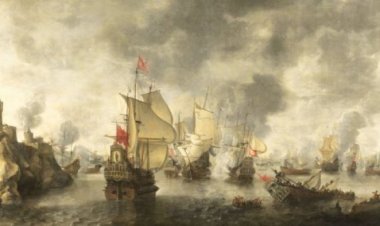
- When the Ottoman Sultan appointed Ibrahim Pasha as governor of Greece and tasked him with suppressing the war of independence there, Britain sent its fleet after persuading both Russia and France to join it. The allied fleets defeated the Egyptian fleet at Navarino in 1827 and forced it to return to Egypt. Britain then threatened Muhammad Ali, through the British admiral Codrington, in August 1828, compelling him to withdraw all his forces from Greece.
- In 1840, Britain convened an international conference in London to issue decisions forcing Egypt and its army, led by Ibrahim Pasha, to withdraw from the Levant, which Egypt had ruled for ten years. The Egyptian presence there had threatened the integrity of the Ottoman Empire, which Britain chose to defend at that time. Consequently, the Egyptian armies withdrew and adhered to their African borders in compliance with the decisions of the London Conference.
- When both Ibrahim Pasha and Muhammad Ali died in 1848, Britain intervened by pressuring the Ottoman Porte to appoint Abbas Hilmi I, the grandson of Muhammad Ali (son of Ahmad Tusun), as governor of Egypt instead of one of Ibrahim Pasha’s sons. Abbas was considered Britain’s man in Egypt and was known for his hostility toward the French. As a result, Abbas I expelled foreigners from Egypt and halted all projects, except for the construction of the railway line between Cairo and Alexandria, which Britain and its engineers carried out. Abbas I isolated himself in a palace he built in Benha, treated those around him poorly, and was ultimately assassinated in 1854 by palace servants.
- After the assassination of Abbas I, Muhammad Said, son of Muhammad Ali, assumed power. Unlike his nephew Abbas I, Muhammad Said was more inclined toward French influence. This led him to sign the decree granting Ferdinand de Lesseps the concession to dig and operate the Suez Canal. Britain again intervened by pressuring the Ottoman Sultan to reject the canal project, causing it to be suspended for a long period. Due to the massive financial commitments Muhammad Said accepted for the canal, Egypt’s debts accumulated, reaching 250 million gold francs by the end of his reign. This prompted Britain to establish a bank in Egypt to benefit from the interest on these debts, called the Anglo-Egyptian Bank.
- Ismail, son of Ibrahim Pasha, came to power in January 1863 after Muhammad Said’s death. Ismail was not close to English culture and was wary of British movements in Eastern affairs, having graduated from a French military staff college. Meanwhile, Nubar Nubarian played a covert role akin to that of a double agent, sometimes serving French interests and at other times British ones. In his memoirs, Nubar wrote that he despised Muhammad Said but hated Khedive Ismail, despite reaching the highest offices and receiving the title of Pasha under Ismail’s rule. Nubar played a key role with de Lesseps in persuading Ismail to sell Egypt’s shares in the Suez Canal in 1875 to the British Prime Minister Benjamin Disraeli. When Nubar was appointed Prime Minister of Egypt in 1878, he worked behind the scenes in Britain’s favor to convince the Ottoman Sultan to depose Khedive Ismail in 1879. He later served as Prime Minister at various stages during the reign of Khedive Tawfiq.
- During the reign of Khedive Tawfiq, son of Ismail, the British first elevated Tawfiq to the position of Prime Minister and then nominated him to the Ottoman Porte to become the second Khedive of Egypt on 15 November 1879, after successfully removing his father from power. Due to economic collapse, Egypt at that time was effectively governed by the British Controller-General Evelyn Baring (later Lord Cromer), assisted by Auckland Colvin, while the French retained responsibility for managing Egypt’s public debt.
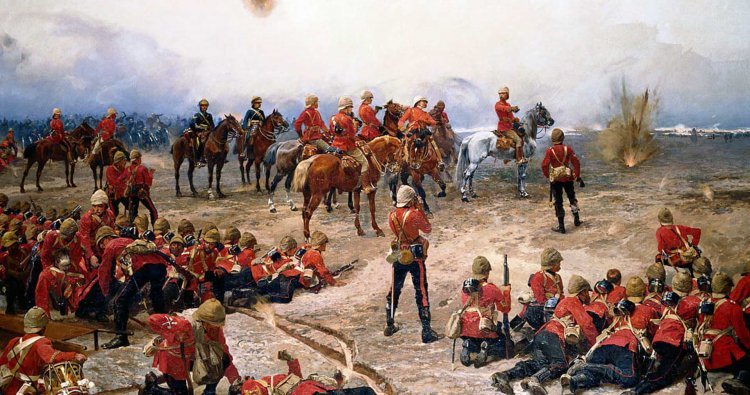
- With the outbreak of the Urabi Revolt and the fortification of Alexandria by Urabi’s army against any British attack, the British bombarded the city from the sea and attempted to land troops. The Egyptian army resisted them at the Battle of Kafr el-Dawwar in May 1882. Tawfiq sought refuge aboard a British command ship. In the following weeks, the British fleet moved to the Suez Canal. Urabi rushed to the canal area to try to block the waterway, but de Lesseps promised to prevent any British ships from entering, then broke his promise. The British landed forces at Ismailia and defeated Urabi and his army at the Battle of Tel el-Kebir on 13 September 1882. From that date, the military and political occupation of Egypt began.
- In 1884, Evelyn Baring ordered Khedive Tawfiq to relinquish Egypt’s rule over Sudan, which Tawfiq accepted without hesitation. In 1888, Tawfiq realized the danger of Nubar Pasha’s double role and removed him from power. In subsequent years, Tawfiq lost interest in state affairs, devoted his time to managing his estates, and became involved in ideological activities with Masonic groups until his death on 7 January 1892.
- After the end of the British-aligned reign of Khedive Tawfiq, his son Khedive Abbas Hilmi II came to power and was more independent than his father regarding British dominance. Abbas II sought popular support by reducing taxes and showing closeness to the French. However, in 1895, Lord Cromer, with the support of Kitchener, intervened to impose the appointment of Mustafa Fahmi Pasha—a staunch pro-British figure—as Prime Minister.
- In 1904, Britain signed the Entente Cordiale with France, dividing spheres of influence between them. Britain retained Egypt and excluded France from any intervention there, while France retained Morocco. This agreement paved the way for the later Sykes–Picot Agreement.
- With Turkey’s entry into World War I, Khedive Abbas Hilmi II encouraged Egyptians to resist the British occupation. The British response was harsh: they deposed Abbas, severed Egypt from Ottoman suzerainty, declared a British protectorate, and proclaimed Egypt a sultanate. Hussein Kamel, son of Khedive Ismail, was appointed Sultan while Egypt remained under full British control.
- Under British colonial rule, Britain conscripted tens of thousands of Egyptian peasants to serve in World War I across various countries. Research by Dr. Ashraf Sabry, supported by the Egyptian Armed Forces, showed that the number of Egyptian casualties in Europe during the war exceeded 600,000. This research later led to the Egyptian flag being raised over their graves. During this critical period, the Sykes–Picot Agreement (1916) was signed to divide the defeated Ottoman provinces between France and Britain.
- Sultan Hussein Kamel prepared his only son, Prince Kamal al-Din Hussein, to succeed him. However, upon his death, the British High Commissioner Sir Henry McMahon supported Ahmed Fuad, son of Khedive Ismail, in assuming the position of Sultan of Egypt as Fuad I in October 1917.
- After the war, the 1919 Revolution erupted nationwide, demanding independence and the evacuation of British forces, including from the Suez Canal. Following the Versailles Conference, Britain granted Egypt a form of limited independence on 28 February 1922, abolishing the protectorate and replacing the sultanate with the Kingdom of Egypt on 15 March, followed by the 1923 Constitution. Saad Zaghloul regarded this limited independence as a national disaster, as Britain retained dominance over Egyptian politics, maintained its military bases, and rejected any Egyptian role in Sudan.
- In 1936, amid rising international tensions before World War II and Italy’s occupation of Ethiopia, Britain sought to neutralize Egyptian nationalist sentiment and agreed to negotiate independence under a “friendship treaty.” The treaty, signed in August 1936, granted Egypt greater independence without affecting British military presence in the Suez Canal and granted Britain the right to intervene militarily at any time under the pretext of protecting mutual interests.
- With the outbreak of World War II, British military presence in Egypt increased, and Egypt was compelled to supply British forces with fuel, food, and other necessities to be paid for after the war (which Britain did not do until after the nationalization of the Suez Canal in 1956). The royal court and the Egyptian government (Ali Maher’s cabinet) were sympathetic to the Axis powers in hopes of ending British rule. In response, British tanks surrounded Abdeen Palace on 4 February 1942, forcing King Farouk to change the government and appoint a Wafd cabinet. On 26 February 1945, Britain forced Egypt to declare war on Germany and Japan to secure a seat as an independent state in the newly founded United Nations.
- From 1945 to 1951, successive Egyptian governments attempted unsuccessfully to amend or activate the 1936 Treaty. This led Mustafa al-Nahhas to unilaterally abrogate the treaty on 8 October 1951, declaring, "For Egypt I signed the treaty, and for Egypt I abolish it,” and proclaiming independence under the name “The Kingdom of Egypt and Sudan.” Britain did not recognize the abrogation, triggering the Canal War between Egyptian fedayeen and British forces, resulting in hundreds of deaths, the burning of Cairo, the 1952 Revolution, and continued resistance until the signing of the Evacuation Agreement in 1954 and the final withdrawal in June 1956.
- Then the last attempt at British intervention in Egyptian affairs was its participation with France and Israel in the tripartite aggression at the end of 1956, in the hope of returning to occupy Egypt and its canal. The attempt failed due to Egyptian resistance and the Soviet Union's intervention with the nuclear threat, as well as Eisenhower threatening Anthony Eden with the devaluation of the pound sterling if British forces did not withdraw immediately from Egypt. This has been Egypt's history with England for many decades. This is just part of a long series of political, military and economic interventions on behalf of the largest colonial empire known to modern history, which were met with Egyptian resistance that ignited the Egyptian national movement against the colonizer. The empire on which the sun never sets ended and Egypt retained a history full of heroism. A history written by ancestors with their blood to remain a lesson to the grandchildren.
English Language Coordinator: Mariam Essa