The Suez Canal Is Egyptian Sovereign Territory
Translated by Menna Tarek
Reviewed by Mariam Essa
Interviewer: Direct negotiations between Washington and Cairo regarding the Suez Canal and its management have been stagnant, so what is your response to that?
President Nasser: There is absolutely no change in our position on the vital points that affect Egypt's absolute sovereignty over the Suez Canal. The Suez Canal is Egyptian territory under Egyptian sovereignty, the same as the railways and other parts of Egyptian territories. We exerted every effort we could to reach an agreement with Washington within the scope of our undisputed rights and sovereignty.
The Suez Canal, through which ships now pass every day, will be managed and operated by Egypt in accordance with the Constantinople Agreement concluded in 1888 and all ships that pay fees to Egypt will pass through the canal with complete freedom.
Interviewer: Does this include Israeli ships as well?
President Nasser: Israeli ships will cross the Suez Canal, like other ships, when peace is established; this means a just settlement of the Arab refugee problem. We are at war with Israel and the clearest proof of the existence of a state of war on the part of Israel is Ben Gurion's daily threat of aggression.
Interviewer: But what about the Gulf of Aqaba, Mr. President?
President Nasser: Let's address one problem at a time and I believe the Suez Canal is a priority.
The talks between Cairo and Washington are not deemed to be ended and we are always ready to talk about points if there are any possibilities to find foundations for agreement on what we have not agreed upon. However, we cannot discuss demands that violate or limit Egypt's sovereignty over any part of its territory. I can refer here to the statement of US President Eisenhower, in which he indicated that free nations do not compromise on their sovereignty.
Interviewer: When could you lay the foundation stone for the High Dam?
President Nasser: Initial work on the dam project could begin in 1958 if there was no aggression in that area and no world war broke out. We are determined to build the reservoir, and the Planning Council has prepared the methods and means by which the reservoir can be built.
I also do not believe that the United States supports any use of military force by other Western states to prevent Egypt from operating the canal. The use of force clearly means another aggression that will lead to dire ramifications greater than the British-French-Israeli invasion last November.
We must not lose hope in reaching an agreement, but the plans and rules for reaching other negotiations will be different.
ـــــــــــــــــــــــــــــــــــــــــــــــــــــــــــــــــــــــــــــــــــــــــــــــــــــــــــــــــــ
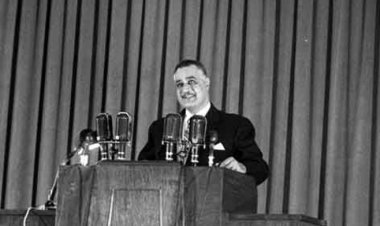
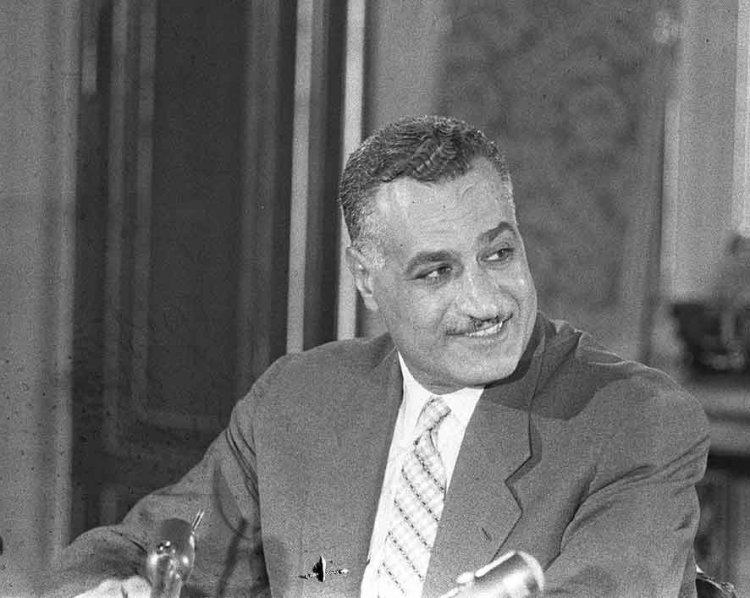
President Gamal Abdel Nasser's speech to Carl von Mejand, the dean of American diplomatic correspondents
On April 8, 1957.
English Language Coordinator: Mariam Essa