A Reading of Gamal Abdel Nasser's Personal Diaries in the Palestine War
Written by Amr Sabeh
Translated by Malak Ahmed
Reviewed by Nada Tamer
Gamal Abdel Nasser’s personal diaries during his participation in combat in the Palestine War are the first document in his own handwriting that reflects his feelings and impressions as an Egyptian officer fighting against the Zionist enemy in Palestine. Their significance stems from the fact that they were written while Gamal Abdel Nasser was still out of power.
Gamal Abdel Nasser began writing his personal diaries on June 3, 1948, and continued until December 30, 1948. He stopped writing in the middle of a sentence because of renewed Israeli attacks on his battalion’s position.
In 1978, Mohamed Hassanein Heikal published the first edition of the book Gamal Abdel Nasser’s Diaries of the Palestine War, which consisted of three parts:
The first part contains Gamal Abdel Nasser’s diaries of the Palestine War, which Heikal edited and published in Akhir Sa‘ah magazine in 1955.
The second part contains Gamal Abdel Nasser’s official diaries, published in full for the first time.
The third part contains Gamal Abdel Nasser’s personal diaries, which he recorded in his personal notebook and which were published for the first time in this book.
Heikal also wrote an introduction and a conclusion on Abdel Nasser’s diaries of the Palestine War and on his vision of the Palestinian cause and the Arab–Israeli conflict.
On the first day of the section devoted to Gamal Abdel Nasser’s personal diaries, which is the part that interests me most, we find that Gamal Abdel Nasser went to the volunteers’ camp to meet Major Mahmoud Labib. When he did not find him there, he encountered him on his way to Gaza in the company of Sheikh Mohamed Farghali, and they agreed to perform the Friday prayer together at the volunteers’ camp.
Major Mahmoud Labib was one of the most prominent figures in the Muslim Brotherhood. He was among the founders of the organization's Special Apparatus, its military wing, and served as the Commander-in-Chief of the Muslim Brotherhood volunteers in Palestine. Sheikh Mohamed Farghali was the commander of the Muslim Brotherhood battalions during the 1948 Palestine War, a member of the Guidance Bureau, the head of the Ismailia and Canal Zone branch, and another founder of the organization's Special Apparatus.
Gamal Abdel Nasser’s eagerness to meet the two men raises questions about the nature of his relationship with the Muslim Brotherhood before the Revolution. At the same time, it strongly refutes the false claims later spread by the Brotherhood alleging that he had maintained ties with the Israelis during the Palestine War. These accusations emerged amid the escalating political conflict between the Free Officers and the Brotherhood after the Revolution in an attempt to tarnish his reputation.
Gamal Abdel Nasser was among the strongest advocates for participating in the Palestine War. Even before the Egyptian government officially decided to enter the conflict, he had considered volunteering to fight in Palestine.
There is a well-known incident concerning the investigation Gamal Abdel Nasser underwent after the Palestine War when an army manual on manufacturing hand grenades bearing his signature was discovered during a search of one of the Muslim Brotherhood's branches as part of the mass arrests carried out in 1948.
In May 1949, following his return from the battlefield, Egyptian Prime Minister Ibrahim Abdel Hady Pasha summoned Gamal Abdel Nasser for questioning about his alleged relationship with the Muslim Brotherhood in the presence of Lieutenant General Othman El-Mahdi, Chief of the Army General Staff.
Gamal Abdel Nasser denied any affiliation with the Brotherhood and told the Prime Minister that he had given the manual to his fellow officer Anwar Al-Sayhi. When Ibrahim Abdel Hady asked, "Where is Anwar Al-Sayhi?" Gamal Abdel Nasser replied that he had been killed in the Palestine War. The Prime Minister then dismissed him after warning and threatening him.
Major Mahmoud Labib died on December 18, 1951, before the Revolution. Meanwhile, the conflict between the Muslim Brotherhood and the July Revolution eventually led Sheikh Mohamed Farghali to the gallows following the attempted assassination of President Gamal Abdel Nasser in Alexandria on October 26, 1954, in which Farghali was among those involved in the planning.
Abdel Hakim Amer appears early in Gamal Abdel Nasser’s diary. On June 4, 1948, the two men observed together the fragility of the Egyptian forces’ defensive fortifications, the absence of strategic depth, and the lack of a strategic reserve within the Egyptian Army.
Throughout the diaries, Abdel Hakim Amer appears repeatedly. Although other figures who later played important roles in the 1952 Revolution, such as Salah Salem, Kamal El-Din Hussein, and Zakaria Mohieddin, are also mentioned, it is evident that Gamal Abdel Nasser’s relationship with Abdel Hakim Amer was fundamentally different.
Their bond was deeper and closer than ordinary friendship; it appeared almost familial. During the siege of Faluja, Abdel Hakim Amer kept in contact with Gamal Abdel Nasser’s family, checked on their welfare, and reassured him about the well-being of his wife and two daughters, Huda and Mona. At that time, Gamal Abdel Nasser had not yet had his three sons—Khaled, Abdel Hamid, and Abdel Hakim.
Throughout the diaries, Gamal Abdel Nasser's strong attachment to his small family, his wife, Tahia, and his two daughters, Huda and Mona, is evident. He is constantly preoccupied with their well-being and their future, always asking about them and contacting them whenever he has the opportunity. Indeed, immediately after being struck by a bullet above his heart, they are the first people who come to his mind.
However, this is not the most significant point. Gamal Abdel Nasser's attachment to his wife and children has always been well known. What is particularly striking is the depth of his relationship with his father. He was always keen to stay in touch with him, inquire about his well-being, send him letters, and receive letters from him.
This is noteworthy because many rumors were circulated, and much ink was spilled, claiming that Gamal Abdel Nasser had a strained relationship with his father, marked by constant tension, and that this had profoundly affected his psychological and personal development ever since his father married another woman, Mrs. Enayat Al-Sahn, following the death of his first wife, Mrs. Fahima Mohamed Hamad, Gamal Abdel Nasser's mother.
His political opponents even alleged that he suffered from an Oedipus complex, claiming that he loved his mother and hated his father. Yet the diaries, written by the young officer Gamal Abdel Nasser when he was just over thirty years old, clearly demonstrate that these allegations are unfounded. His relationship with his father appears entirely natural and affectionate. The same is true of his relationship with his uncle, although the uncle's name is not mentioned. I believe he was referring to his uncle Khalil.
Likewise, he remained in regular correspondence with his brother, Ezz Al-Arab Abdel Nasser.
The diaries also record that on September 9, 1948, Gamal Abdel Nasser contacted a man named Abdel Hamid to inform him that his leave had been postponed and asked him to notify his family. I believe this was Abdel Hamid Kazem, the eldest brother of Mrs. Tahia, Gamal Abdel Nasser's wife. Although Abdel Hamid Kazem had initially opposed his sister's marriage to Gamal Abdel Nasser, the two later developed a close relationship. Abdel Hamid Kazem died at a young age of tuberculosis, and Gamal Abdel Nasser later named his second son, Abdel Hamid, after him.
The name "Mr. Youssef" Gamal Abdel Nasser's brother-in-law, also appears in the diaries. He served as principal of Minya Secondary School and Mansoura Secondary School before later becoming Head of the Civil Service Bureau and subsequently Minister of Education. He also acted as an important link between Gamal Abdel Nasser and his family.
Thus, Gamal Abdel Nasser's relationships with his family appear perfectly normal and free of the psychological complexes imagined by his opponents.
On August 23, 1948, Gamal Abdel Nasser wrote of his profound shock at the death of Officer Ahmed Abdel Aziz, commander of the volunteers in the Palestine War, who was killed by friendly fire after Egyptian forces mistakenly identified him as belonging to the Israeli side.
Gamal Abdel Nasser wrote: "I was deeply saddened. Ahmed Abdel Aziz loved his children dearly. He died at the height of his glory, a glory for which he was never rewarded, which the people never witnessed, and for which they never welcomed him. Ahmed Abdel Aziz died full of hope for life. I was deeply grieved by those hopes that were shattered. The last thing he said was to Salah Salem."
These words appear sincere and genuinely express Gamal Abdel Nasser's grief over the death of the fallen hero. They are particularly significant because they constitute the strongest response to certain dubious books later published by his political opponents, in which they accused Gamal Abdel Nasser of killing Ahmed Abdel Aziz.
Such was the extent to which some people were willing to manipulate history by attaching such a disgraceful fabrication to Gamal Abdel Nasser in their efforts to assassinate his character and tarnish his legacy.
Throughout the diary, meetings with the Israelis are mentioned, and it is noteworthy that Gamal Abdel Nasser consistently refers to them as "the Jews" or "the enemy," never as "the Israelis."
When the enemy requested a meeting with the command of the besieged Egyptian forces in Faluja, Gamal Abdel Nasser was assigned by the Egyptian command to arrange the location of the meeting.
The meeting ultimately took place at the Jewish settlement of Gat, where the Egyptian delegation consisted of Sayed Taha, Rizqallah Al-Faskhani, Gamal Abdel Nasser, Ibrahim Baghdadi, and Khalil Ibrahim.
The negotiations ended in failure because the Egyptian side refused to surrender, while the Jews refused to evacuate the wounded to Gaza.
Thus, the meeting was by no means a private encounter between Gamal Abdel Nasser and the Israeli officers. He neither reached any agreement with them nor plotted his Revolution with them, contrary to the extensive claims made in Muslim Brotherhood literature alleging secret contacts and meetings between Gamal Abdel Nasser and the Israelis during the 1948 Palestine War.
Gamal Abdel Nasser was simply an officer serving as a member of an official negotiating delegation, and the negotiations ultimately failed.
During his visit to the Gat settlement, Gamal Abdel Nasser observed the striking civilizational differences between the Jews and the Arabs. He noted the prosperity and modern living conditions enjoyed by the Jewish settlers compared with the miserable conditions in which the Arabs lived.
Throughout the diaries, Gamal Abdel Nasser appears deeply frustrated and angered by the conditions endured by the Egyptian Army during the war. He repeatedly accuses the military leadership of confusion and incompetence. He even blames it for all the disasters, arguing that there was effectively no real command for the Egyptian Army in Palestine. According to him, it was a helpless leadership with neither a plan nor a strategic reserve. Its only concern was to escape the battlefield and ensure its own survival while issuing false statements and fabricated reports of imaginary victories that had never occurred.
These are bitter words that deserve careful reflection. Officer Gamal Abdel Nasser, along with all the Egyptian forces fighting in Palestine, personally experienced these hardships. Unfortunately, almost nineteen years later, nearly the same mistakes were repeated during the June 1967 War, as though we had learned nothing from the past.
Perhaps what wounded Gamal Abdel Nasser most deeply after the 1967 defeat was witnessing the same tragedy for a second time. This, he believed, was what motivated him, after suppressing Field Marshal Abdel Hakim Amer's attempted coup following the setback, to rebuild the Egyptian Armed Forces from the ground up and wage the War of Attrition under extremely difficult circumstances.
Within only three years of the defeat, he succeeded in achieving what seemed almost impossible. Through the efforts of Egyptian heroes, he oversaw the construction of what was then the largest missile defense network in the world, built an army of one million university graduates, and approved the plans for crossing the Canal and liberating the occupied territory. Yet fate decreed that Gamal Abdel Nasser would not live to witness the victory whose foundations he had laid. His heart ceased beating on September 28, 1970, a dark day in our history.
The qualities of resilience and defiance that would later characterize Gamal Abdel Nasser's leadership are already evident in these diaries, particularly in his entry dated October 28, 1948. As Israeli aircraft dropped leaflets over the besieged Egyptian forces in Faluja, urging them to surrender, Officer Gamal Abdel Nasser wrote: "Nonsense. Everyone greeted it with ridicule. Although we have been besieged since the 16th, although we have requested rations and ammunition by air, and although our requests have gone unanswered and have been completely ignored, we shall resist to the last man."
This was the spirit of defiance and resistance deeply rooted in his character, a spirit with which he would later lead his nation through eighteen remarkable years of its modern history and which never abandoned him, even in moments of defeat.
At the same time, the idea of revolution was beginning to take shape in his mind. The suffering endured by the Egyptian Army, in his view, was the direct result of a failed military leadership and an incapable political leadership. He wrote: "We have lost faith in the leadership of the Army and the leadership of the country. These deceivers, these actors, what have they done since we entered the war? Nothing."
These were the seeds of the Revolution that would bear fruit less than four years after Egypt's defeat in the 1948 Palestine War.
In his personal diaries, Officer Gamal Abdel Nasser demonstrates a clear understanding of the nature of the conflict with the Zionist enemy. He recognizes the enemy's strength, superiority, and its position as an extension of the West implanted in the Arab world. His writings also reveal his profound concern for the future of the Palestinian people and his sorrow over the suffering that would result from the defeat and the withdrawal of the Arab armies from Palestine. This understanding continued to shape his policies throughout his years in power. He consistently rejected any separate or partial settlement that failed to restore the Palestinian people's rightful claim to their usurped homeland.
These personal diaries of Officer Gamal Abdel Nasser during the Palestine War constitute a rare historical document that sheds valuable light on the personality of one of the most influential Arab leaders in modern history. Their importance lies not only in the fact that Gamal Abdel Nasser wrote them himself, but also in their remarkable sincerity. Here we encounter a young officer fighting a war under extremely unfavorable conditions and then enduring a prolonged siege. Yet throughout these hardships, he remained committed to recording his personal thoughts and feelings. He wrote without knowing whether anyone else would ever read his diary, or even whether he himself would survive the war.
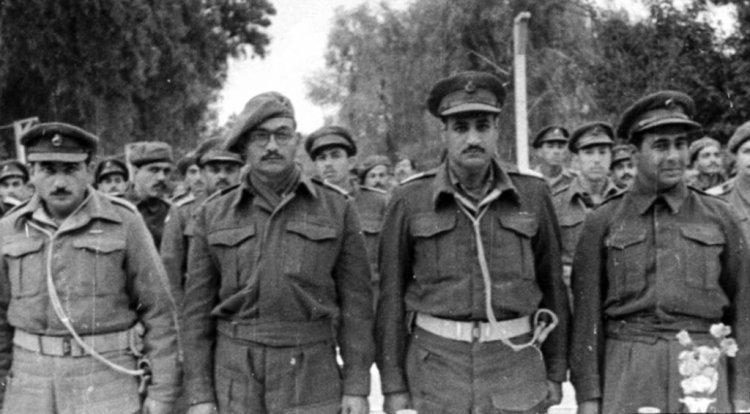
Gamal Abdel Nasser was indeed one of the heroes of the 1948 Palestine War. The Sixth Battalion of the Egyptian Army, in which he served as Chief of Staff, entered Palestine on May 15, 1948. He was wounded by gunfire once before the siege of Faluja and was awarded the Military Star of King Fouad for his bravery. He was among the Egyptian forces besieged in Faluja beginning on October 21, 1948, during which he was wounded twice more and came close to losing his life.
The Palestine War, the corruption of Egypt's political and military leadership, and the siege of the Egyptian forces in Faluja were the principal factors that prompted Gamal Abdel Nasser to begin preparing for the Revolution. He came to believe that the solution to Egypt's tragedy lay in overthrowing the corrupt regime that had led the country to defeat and in ending the British occupation. Thus, the army that had failed to capture Palestine resolved instead to capture Cairo.
These personal diaries will remain an exceptionally important historical document for understanding Gamal Abdel Nasser's character and intellectual formation. They represent an essential step toward unlocking the complexities of his personality.
English Language Coordinator: Mariam Essa