School Box Africa: Advancing Equitable Education and Youth-Led Innovation Across Rural Africa

By: Jessica Pliskin – Physics master’s graduate from the University of Bristol, international model, Nasser Fellowship alumna, innovator, and co-founder of School Box Africa
In recent years, youth-led innovation in Africa has increasingly moved beyond advocacy toward the design and delivery of concrete solutions to structural development challenges. One such initiative is School Box Africa, a youth-led, technology-driven education project founded by alumni of the Nasser Fellowship for International Leadership, reflecting the Fellowship’s enduring commitment to South–South cooperation, innovation, and inclusive development.
School Box Africa is an education and skills-development initiative focused on expanding access to high-quality, future-ready learning for young people in rural and underserved communities, beginning in Zambia. The project responds to a persistent and well-documented challenge across the continent: while Africa has one of the world’s youngest and most ambitious populations, millions of students—particularly in rural areas—remain excluded from modern education due to limited infrastructure, electricity shortages, overcrowded classrooms, and a lack of digital tools.
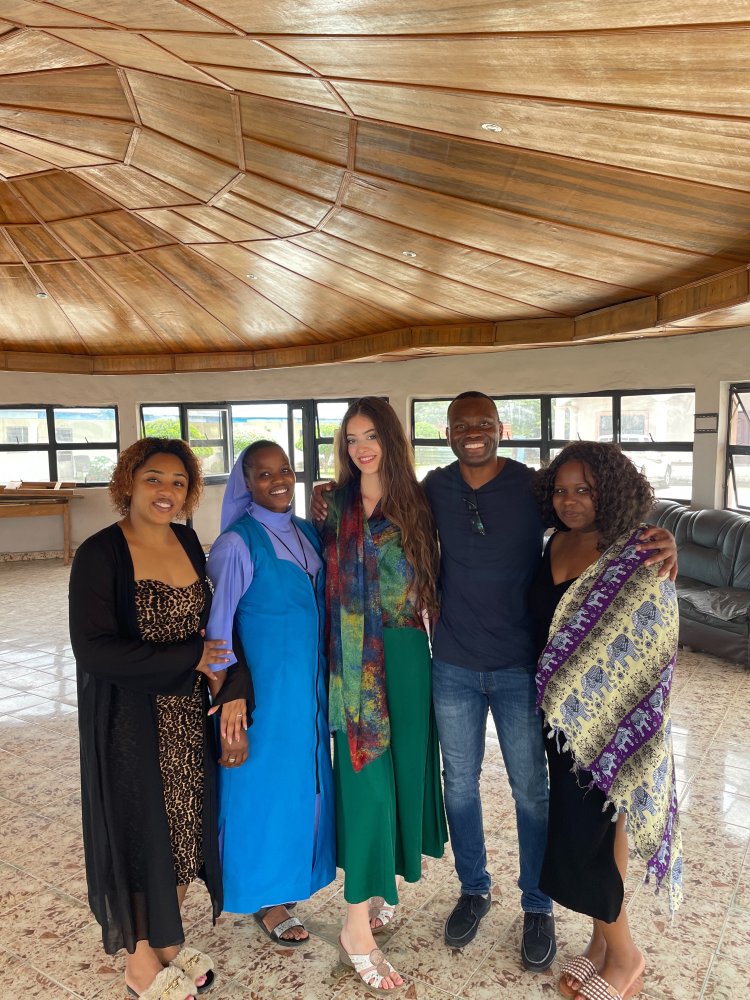
At its core, School Box Africa transforms shipping containers into solar-powered, AI-enabled learning hubs, referred to as “School Boxes.” These units are designed to function independently of unreliable infrastructure, generating their own electricity and operating both online and offline. Each School Box is equipped with durable computer systems and adaptive learning technologies that provide personalised tuition in science, technology, engineering, mathematics, and practical trades aligned with local economic needs.
The initiative is co-founded by Jessica Pliskin, a Nasser Fellowship alumna and youth leader with a background in physics, innovation, and international advocacy; Edward Mwaba Ndalama, a senior Zambian political leader and Nasser Fellowship alumnus with extensive experience in governance and public administration; and Ilae Krivine, an innovator leading the project’s technical design and serving as the initial idea generator. Together, the founding team combines policy insight, technical expertise, and grassroots leadership—bridging innovation with institutional collaboration.

Importantly, School Box Africa is built as a collaborative partnership between the United Kingdom and Zambia. With Jess and Ilae based in the UK and Edward based in Zambia, the initiative intentionally connects global technical expertise, research, and fundraising capacity with deep local governance knowledge and community engagement. This cross-border model allows the project to draw on international best practices while remaining firmly grounded in Zambian priorities, regulatory frameworks, and on-the-ground realities. It also reflects a growing model of equitable global cooperation—one that moves beyond aid toward shared ownership, mutual learning, and long-term sustainability.
A defining feature of School Box Africa is its emphasis on local capacity-building. Rather than importing a finished solution, the project is designed to be built, maintained, and scaled by local engineers, technicians, and educators. This approach aligns with continental priorities under Agenda 2063, particularly in strengthening human capital, promoting industrialisation, and ensuring that technological advancement translates into sustainable employment and skills transfer.
Gender inclusion is also a central pillar of the initiative. School Box Africa places specific focus on women and girls, who remain disproportionately excluded from STEM education in many rural contexts. The project integrates gender-sensitive operational policies and community engagement strategies to ensure safe, inclusive learning environments that actively encourage female participation and leadership.

Following the completion of virtual designs and early prototyping, School Box Africa is entering its initial implementation phase. Planned next steps include in-country engagement with Zambian government officials and community leaders, the construction and testing of the first physical prototype, and the establishment of local production and training pathways. The long-term vision is to scale the model across multiple regions, contributing to a continental ecosystem of youth-led, technology-enabled education hubs.
School Box Africa reflects a broader shift among youth leaders and innovation in Africa—from identifying challenges to architecting solutions grounded in local realities and global best practices. It demonstrates how alumni of leadership programmes such as the Nasser Fellowship are translating dialogue, solidarity, and policy engagement into tangible development outcomes.
As Africa confronts the dual challenges of demographic growth and technological transformation, initiatives like School Box Africa underscore a critical message: sustainable prosperity will not be achieved through infrastructure alone, but through investing in people, skills, and inclusive innovation—led by the very youth whose futures are at stake.